
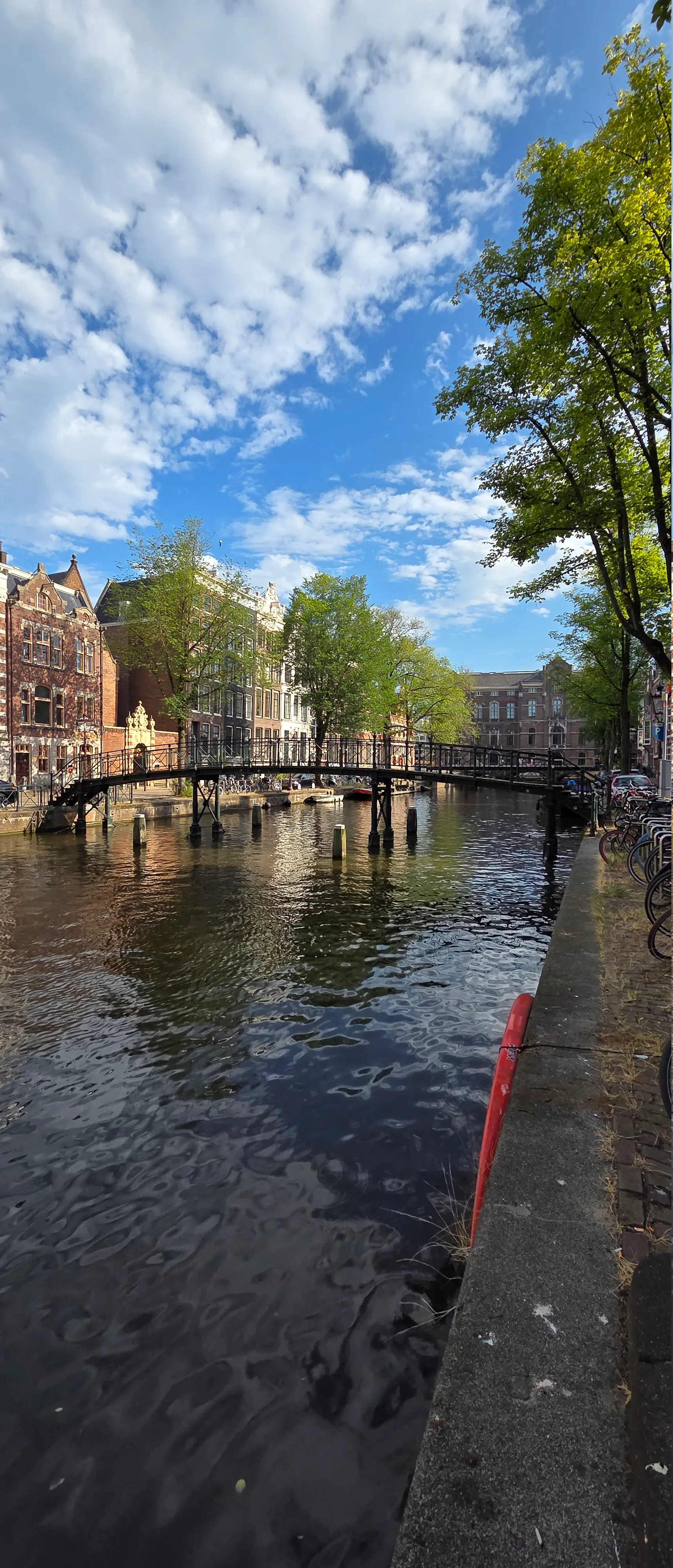
Amsterdam is the city I would send almost anyone to in October, which tends to surprise people, because the version they carry around in their heads is the summer one: the canals in full sun, the terraces packed, a boat party under every bridge and the whole center moving at the speed of the slowest rental bike. That version is real and it is lovely for about a day. The city underneath it (the one that actually lives here, with its candlelit cafés and hidden courtyards and its unhurried, slightly gruff hospitality) comes back in the autumn, when the light goes low and gold over the water by late afternoon and the canal houses start lighting their front rooms before anyone has thought about dinner.
Walk first, and save the bicycle for later unless you already ride in a busy city, because the bike lanes here are a commute rather than a sightseeing route and the people on them are not in the mood to wait for you. Spend your slow attention on the Jordaan, the old working quarter just west of the main canal ring, where the canals narrow (Bloemgracht, Egelantiersgracht, the Brouwersgracht where it bends) and the streets go quiet enough to hear the Westerkerk’s bells. Look for the hofjes, the old almshouse courtyards tucked behind ordinary street doors, a few of which still let quiet visitors in during the day, and go to the Noordermarkt on a Saturday morning, when the farmers’ market fills the square around the church. Walk the Nine Streets, the small lanes that cross the big canals between the Jordaan and the center, in the late afternoon rather than at noon. Give the Rijksmuseum the first hour of a weekday morning, while the big rooms are still quiet, and decide about the Anne Frank House early, since it only sells its tickets online and well ahead.
Then, when the light starts to go, find a brown café, which is what the city calls its old wood-paneled bars with the candles already lit and the windows fogging up, and order something small. October is when those rooms make the most sense, and an hour in one of them as the canal outside turns from gold to blue is most of what I would want from an Amsterdam evening. The one thing worth checking before you choose your week is the calendar, since the city’s big electronic-music festival takes over several days every October (late in the month this year), and the town feels very different while it is on.
The Netherlands was the first country in the world to open marriage to same-sex couples, in 2001, and Amsterdam carries that history lightly and everywhere at once. The Homomonument sits beside the Westerkerk on the Keizersgracht, three pink granite triangles with one of them stepping down into the canal, and there are usually flowers on it and people sitting on its steps with their lunch, which tells you most of what you need to know about how ordinary it is here. There is a scene, and it is as easy as any in Europe (the Reguliersdwarsstraat for the bars, the Zeedijk for some of the oldest in the city, the Warmoesstraat for the leather crowd, and the canal parade in early August, when the whole city turns out), but the welcome I notice in October is the everyday kind, which is the one I trust most: two men walking home across a bridge with the groceries, and nobody looking twice.
That is the Amsterdam trip I would build. Not the city at its busiest, which anyone can find, but the city in the weeks when it goes back to being itself, with the hours arranged so the canal is gold while you are walking beside it and the café is warm by the time you want to be inside. The when of a trip is the half most people leave to chance, and Amsterdam in October is the clearest argument I know for not leaving it there.
 Richard · Pontiris
 One of these, once a month.
One story, one destination insight, and nothing else.