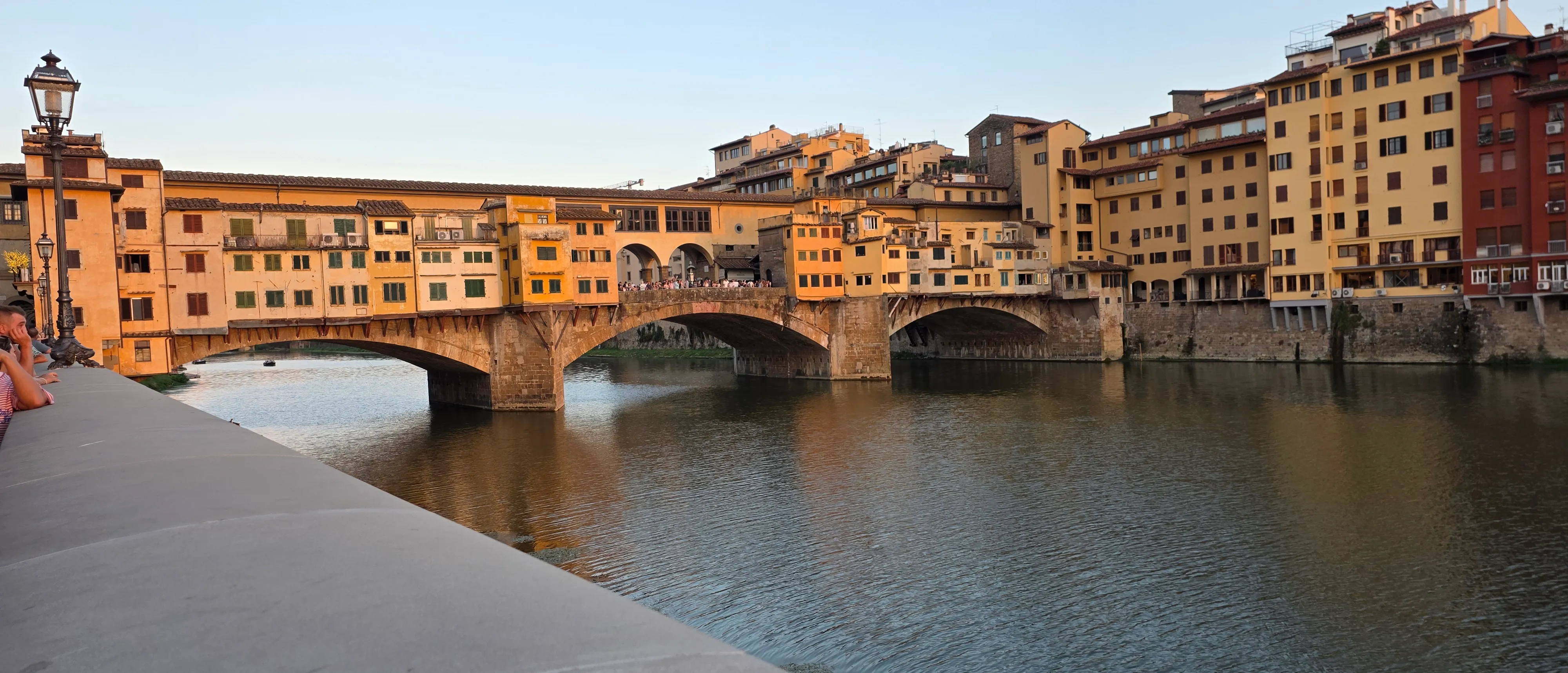
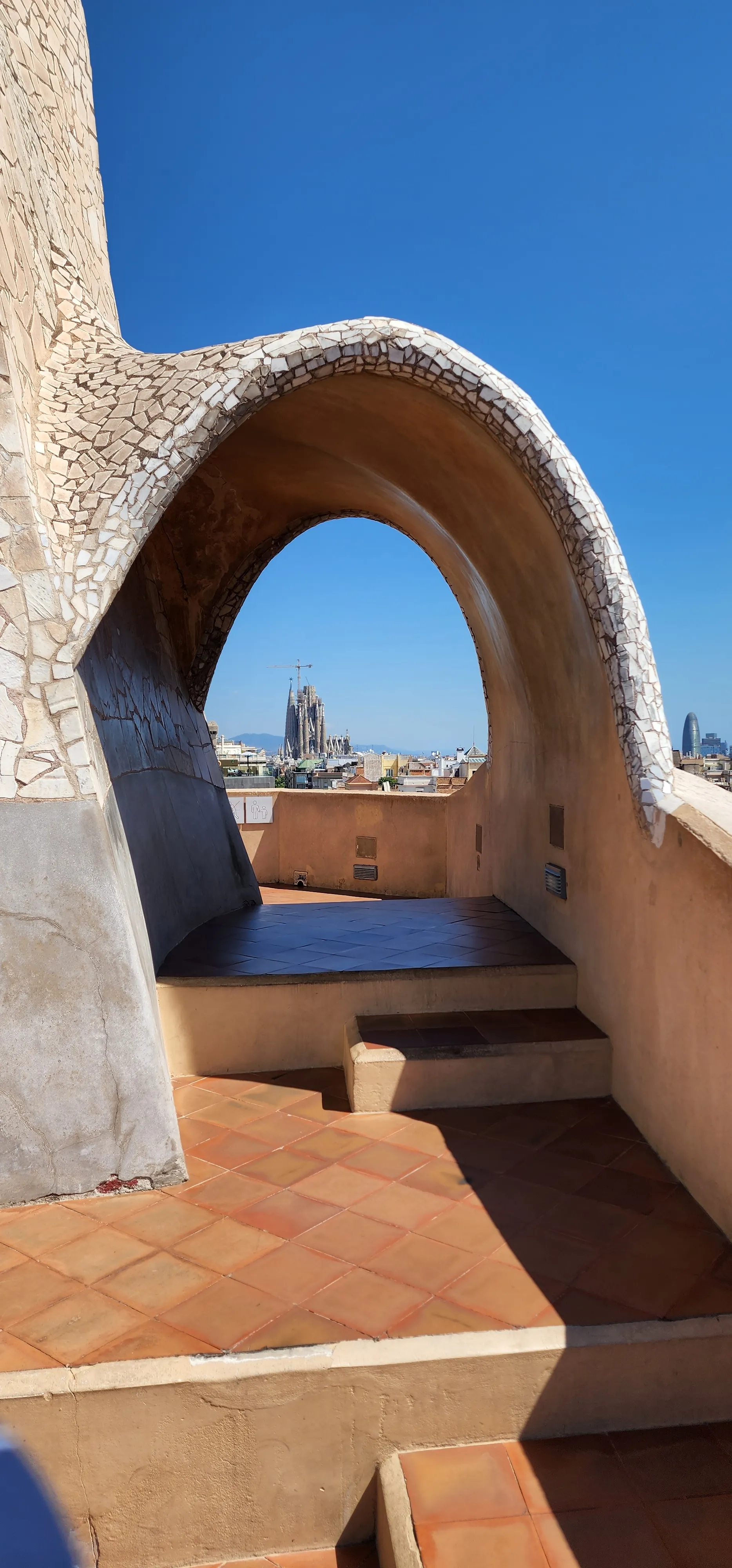
Some cities you visit, but Barcelona you settle into for a few days. It sits where the Mediterranean meets one of the most walkable street grids ever drawn, with Gaudí’s imagination rising out of it at odd, wonderful intervals, and the temptation is to treat it as a checklist of famous facades and queue your way through all of them — the better move is to pick a couple, go early, and then spend the rest of the day at the level of the street, with a long lunch in the old town, an afternoon swim, and a rooftop as the light goes long over the rooftiles.
Spend your slow attention on a few things. Take Gaudí early or not at all, because the Sagrada Família and Casa Milà reward the first slot of the morning before the tour groups thicken, and the rooftop of La Pedrera at opening — its chimneys against a clean sky, the city still quiet below — is worth setting an alarm for. Walk the neighborhoods on foot, losing an afternoon in the Gothic Quarter and El Born among narrow lanes and a plaça you did not plan on and a wine bar that turns one glass into three, then climbing up to Gràcia, where the squares feel like a village the city grew around. And take the sea and the sunset seriously, because Barcelona is one of the few great cities with a real beach, whether that means an evening swim off Barceloneta or the light dropping from a rooftop in the Eixample with a vermut in hand and nowhere to be.
Spain’s 2005 marriage equality reaches the coast easily here, and Barcelona wears it without fuss. The gay-friendly heart is the “Gaixample,” a cluster of the Eixample grid around Carrer del Consell de Cent, where the bars, cafés, and hotels sit within a few walkable blocks of each other, and when you want the sea with a scene attached, Sitges — the famously gay beach town — is a forty-minute train down the coast. The welcome is woven in, not stamped on top: you can have as much of a night out or as quiet a corner as you like, and both are a few streets apart.
This is exactly the kind of trip I love to build: a place chosen for how it feels, paced so the famous things are a quiet early hour rather than a queue, with the right neighborhood, the right room, and the welcome already sorted so your attention goes to the sea and the rooftiles instead of the logistics. The opening-slot ticket, the room a short walk from everything, the day the train to Sitges is worth it — that is the part I handle.
If a slow week somewhere like this is on your mind, that is what Pontiris is for. I am planning the first trips now, and the Horizon List is open through August 31.
Welcoming is a word travel uses loosely, so let me tell you what I mean by it — because it’s the thing I’ve spent twenty years learning to read.
A place can be perfectly legal and still be cold. It can have the right laws on the books and a tourism board that runs a campaign every June, and you can still arrive and feel the temperature drop when you ask for the room with one bed. That isn’t welcome. That’s tolerance with good marketing.
Welcome is quieter and harder to fake. It’s the café owner who doesn’t blink. It’s the guide who adjusts the story without being asked. It’s the neighborhood where you stop translating yourself in your head and just order the second coffee. You won’t find it on a list of gay-friendly destinations, because it doesn’t live at the level of a country. It lives at the level of a street, a season, a particular hotel with a manager who has run the place for fifteen years.
That’s the part you can’t Google, and it’s the part I keep. I don’t plan trips around where the law says you’ll be fine. I plan them around where you’ll actually exhale — and those are not always the same map. Sometimes the welcome is waiting in a place the headlines told you to skip. Sometimes it’s missing from one that markets itself hard.
I don’t make a show of any of this. The welcome shouldn’t be the theme of your trip — your trip should be the theme of your trip. The welcome should just be there, woven through it, so that you get to spend your attention on the food and the light and the person across the table, instead of on the quiet math we all learned to do without noticing.
That’s the whole idea behind Pontiris. Not a flag on the door. A trip where the door was already open before you got there.
Some trips are built around the famous hour — the timed entry, the sunset everyone photographs from the same wall. The ones I remember are built around the hour nobody scheduled.
In San Miguel de Allende it came late. We’d done the things you do: the church the color of a sunset, the rooftop where the margaritas cost what a whole dinner costs an hour away, the market where I bought something I didn’t need because the woman selling it told a good story. A full day. The kind a guidebook would call complete.
And then the town went to bed, and went quiet in the particular way high-desert towns do, and I stayed up on the roof. The cathedral stopped being a landmark and went back to being a building. The cobbles stopped being charming and went back to being old. And the sky — I had forgotten, the way you forget in cities, how many stars there actually are. They don’t perform. They’re just there, in numbers that feel almost rude, over a town that has been watching them for four hundred years.
Nothing happened in that hour. That’s the point. No one was selling me anything, nothing was on the itinerary, and it is the part of the trip I’d go back for first.
I think about that hour a lot when I plan, because you can’t book it. You can’t put “transcendence, 9:40pm” on a schedule. But you can build a trip with room in it. You can decline to pack the evenings. You can choose the rooftop room over the cheaper one that faces the alley. You can leave the last night open on purpose, make space for the unscheduled hour, and then get out of its way.
That’s most of what I do, honestly. I handle the dozen tabs so you arrive with nothing to manage — and then I leave you a little room. Because the trips worth taking always have an hour in them that no one planned, and the whole job is making sure you’re somewhere worth being when it arrives.
If it’s been a while — if somewhere along the way travel started to feel like more risk than it’s worth, or more work than it’s worth, and you’ve been waiting for it to feel possible again — this one is for you.
I plan a lot of first trips back. People who used to go everywhere and then stopped, for a hundred reasons, and want to find their way to the door again without it being a whole production. When they come to me unsure, I don’t start with destinations. I start with three questions.
The first: what’s the real version of the worry? Not the headline version — yours. “I don’t want to feel watched.” “I don’t want to manage logistics in a language I don’t speak.” “I don’t want to be the only ones.” Name the true one and most of the plan writes itself, because now I’m solving for something specific instead of a vague dread.
The second: what did travel used to give you, before it got complicated? Some people travel for the food, some for the quiet, some to feel anonymous in a big city, some to feel held in a small one. The first trip back should over-deliver on the thing you actually missed — not the thing a brochure thinks you should want.
The third: how much do you want to carry? There’s no wrong answer. Some people want one hard day of travel and then stillness. Some want movement, a new town every two nights. Knowing this is the difference between a trip that restores you and one that wears you out in a new way.
That’s it. Three questions, and the destination almost names itself. The point isn’t to talk you into somewhere bold. It’s to find the place that gives you the most and asks the least, for this particular trip — while you remember that the world is more open than the last few years made it feel. The world hasn’t gone anywhere. You just need the door held while you walk back through it. That part, I can do.
Some places you have to let in, but Puerto Vallarta just opens. It sits where the Sierra Madre drops straight into Banderas Bay, an old fishing town that grew into one of the warmest welcomes in the Americas without ever losing the cobblestones, and the move here is not to chase a list — it is to settle into the Zona Romántica, find a rooftop or a palapa on Playa Los Muertos as the afternoon tips over, and let the whole bay go gold while the fishing pangas come in and somebody starts the music a little early.
Spend your slow attention on the Zona Romántica on foot. The Old Town quarter of Emiliano Zapata is the heart of it, with cobbled lanes climbing off Olas Altas, café tables that turn a coffee into a morning, and Playa Los Muertos and its pier just below, where most of the gay-friendly hotels, bars, and beach clubs sit close enough to wander between. Take the sunset seriously, because Banderas Bay faces west and the evening is the main event — from a rooftop in the Romántica, a beach palapa with your feet in the sand, or the Malecón as the boardwalk fills and the light goes amber on the water. And keep a day for beyond town: the surf towns of Sayulita and San Pancho up the coast for a slower, barefoot afternoon, the river villages and jungle pools of the Sierra Madre behind it, and in winter the humpback whales that fill the bay close enough to watch from the water.
Mexico brought in nationwide marriage equality in 2022, and Jalisco — the state Puerto Vallarta sits in — got there years earlier, in 2016. But the welcome here is older than any law: this has been a gathering place for gay travelers for decades, and it shows in how unbothered it all feels. Two men checking into a boutique hotel in the Romántica draw no second look, the beach clubs are easy and mixed, and there is a real scene if you want one and quiet just a few streets over if you do not.
This is exactly the kind of trip I love to build: a place chosen for how it feels, paced so the sunset is something you arrive for rather than catch by accident, with the right neighborhood, the right room, and the welcome already sorted so your attention goes to the bay and the music instead of the logistics. That part, the planning by someone who actually knows the way, is what I handle.
If a sunlit week somewhere like this is on your mind, that is what Pontiris is for. I am planning the first trips now, and the Horizon List is open through August 31.
Some places impress you, but Chania just lets you in. Crete’s prettiest town wraps a Venetian harbor in a tangle of lanes worn smooth for six hundred years, and the move here is not to do a lot — it is to find a table at the edge of the old port near golden hour, order a carafe of raki you did not strictly need, and watch the light go amber on the stone while the lighthouse at the harbor mouth starts to glow.
Spend your slow attention on the old town on foot. Get lost on purpose in Splantzia, the quieter quarter, with its shaded squares and a centuries-old plane tree, and wander the old leather lane for honey, herbs, and Cretan olive oil to take home. Give the long lunches their due — dakos, slow-cooked lamb, greens you cannot name and will want the recipe for, in tavernas that run late and pour generously. And keep a day for the beaches: the pink sand at Elafonisi, the turquoise lagoon at Balos, and the easygoing, gay-friendly Macherida cove out on the Akrotiri peninsula.
In 2024 Greece became the first Orthodox-majority country to bring in marriage equality, and Crete is among its most relaxed corners. In Chania that shows up quietly: two men sharing a table on the harbor draw no second glance, and the welcome is unbothered and warm. There is no big scene to speak of — a handful of easygoing, mixed bars rather than a nightlife district — and honestly, that is the appeal. Chania’s welcome lives in the ease, not the spectacle.
This is exactly the kind of trip I love to build: a place chosen for how it feels, paced so you actually sink into it, with the welcome already sorted so you can spend your attention on the raki and the light on the water instead of the logistics. The harbor table at the right hour, the room on the right lane, the day the beach is worth the drive — that is the part I handle.
If a slow week somewhere like this is on your mind, that is what Pontiris is for. I am planning the first trips now, and the Horizon List is open through August 31.
Some places ask to be admired, but Seville just takes you by the arm. Andalusia’s capital was built for heat, which means it was really built for the cool that follows it, and the whole rhythm of the city bends toward the evening — the orange trees, the tiled courtyards, the horseshoe arches of the Alcázar, the slow brown curve of the Guadalquivir. The move here is not to march through the monuments in the midday sun. It is to see one or two things early, disappear into the shade for the long afternoon, and let the city hand you back the day at dusk, when the squares fill and the first tapas land on the table.
Spend your slow attention where the city rewards it. See the Alcázar and the cathedral early — book the first slot of the day while the arches and reflecting pools are still quiet, then climb the Giralda before the cathedral fills, because by eleven the heat and the crowds arrive together. Take your tapas slowly: Seville invented the idea of a small plate and a stop, so do not eat in one place — drift between bars in Santa Cruz and over the river in Triana, ordering one dish and one glass at each, the way the city actually does it. And give the evening to the river: cross to Triana at golden hour, walk the bank by the Torre del Oro, and find flamenco in a small room rather than a tourist hall, the kind where the guitar starts before anyone announces it.
Spain brought in marriage equality back in 2005, one of the first countries in the world to do it, and two decades on the welcome has settled into something completely unremarkable. In Seville it centers on the Alameda de Hércules, a long tree-lined square that is the city’s easygoing gay-friendly heart — mixed bars, late terraces, tables that spill into the open air, and no spectacle to speak of. Two men over a shared plate of jamón draw no second glance. The welcome here lives in the ease, not the scene.
This is exactly the kind of trip I love to build: a place chosen for how it feels, paced around the heat so the evening is something you arrive for rather than survive, with the right neighborhood, the right room, and the welcome already sorted so your attention goes to the light and the guitar instead of the logistics. The early ticket, the table on the right square, the room a short walk from the Alameda — that is the part I handle.
If a slow week somewhere like this is on your mind, that is what Pontiris is for. I am planning the first trips now, and the Horizon List is open through August 31.